
Couples & Relationship Therapy
Couples therapy can support partners who feel stuck in painful patterns or who simply want to strengthen and deepen their connection.
I have worked with over 100 couples at every stage, from new relationships to long-term partnerships, and have extensive experience with LGBTQIA2S+ couples and polyamorous relationship structures. My practice is queer- and kink-affirming and grounded in respect for diverse identities and relationship agreements.
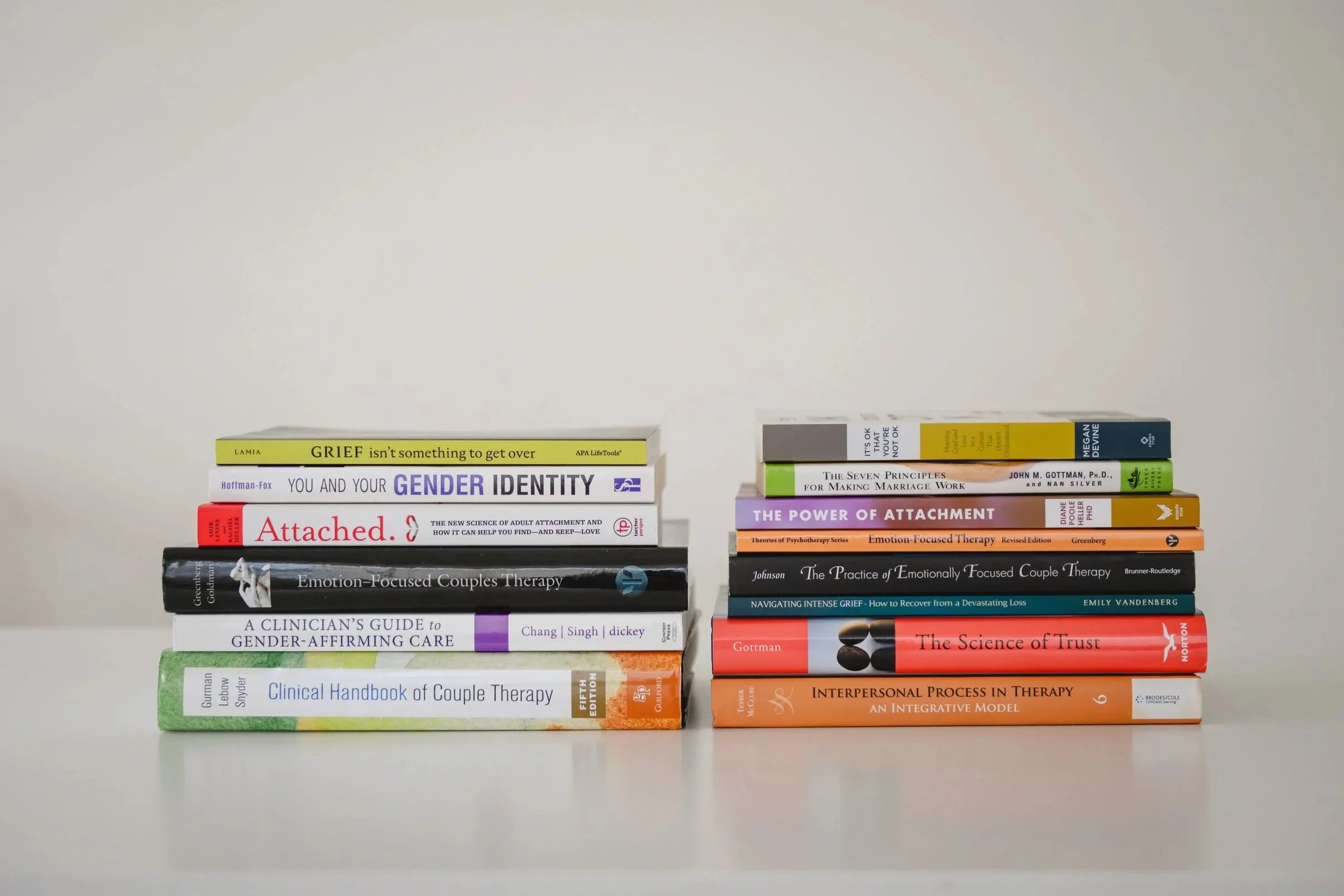
Drawing from evidence-based approaches including the Gottman Method, Emotionally Focused Couples Therapy, and Attachment-Based Therapy, I help couples communicate more clearly, navigate conflict with greater skill, and repair emotional wounds that keep resurfacing.
My goal is to create a steady, nonjudgmental space where all partners feel heard, valued, and supported as you build greater trust and closeness.

What To Expect In Relationship Therapy
When couples begin relationship therapy with me, they can expect a collaborative and structured process where all partners feel heard and respected.
Using the Gottman Method and Emotionally Focused Couples Therapy, we will identify the patterns that keep you stuck and build healthier ways of connecting. Our work may include strengthening the foundation of your friendship, deepening emotional bonds, improving communication, and learning how to repair after conflict so disagreements do not lead to distance.
Frequent goals in couples counseling include:
Communicating without repeating the same arguments
Identifying and interrupting patterns that create distance
Building greater emotional safety and security
Developing practical repair skills after conflict
Healing relationship wounds and rebuilding trust
What Couples Therapy Can Do For You
Rebuild Emotional Connection
Couples therapy helps partners feel closer again by rebuilding trust and creating emotional safety. Your relationship can become a place where all partners feel seen, valued, and emotionally supported.
Improve Communication & Conflict Patterns
Marriage and relationship counseling can help you talk about hard topics without getting stuck in cycles of blame, withdrawal, or escalation. You will develop healthier ways to solve problems without defensiveness or scorekeeping.

Heal Past Hurts & Relationship Wounds
Unresolved wounds often resurface during stress or conflict. Therapy provides space to process old injuries so you can move forward with greater understanding, compassion, and commitment.

Who Can Benefit From Couples Therapy?
Couples therapy can support partners who feel disconnected, stuck in recurring conflict, or navigating major transitions. It can range from a brief tune-up to more intensive work after betrayal, trust ruptures, or long-standing conflict patterns.
If you relate to any of the following, relationship therapy may help:
Arguing about the same issues over and over
Conflict that escalates or goes nowhere
Revisiting old topics that never fully resolved
Struggling to compromise or make decisions together
Avoiding difficult conversations
Feeling lonely or misunderstood within the relationship
Experiencing breaks in trust or uncertainty about the future
Navigating identity differences or shifting roles
Negotiating boundaries, jealousy, or communication in polyamorous or consensually non-monogamous relationships

What are the benefits of couples therapy?
After working in couples therapy and implementing recommended changes you can expect to experience...
Clearer communication without repeating the same argument loops
Stronger trust through consistent repair and transparency
Relationship agreements that honor identity and structure, including polyamory
Healthier conflict resolution that leads to understanding rather than distance
Greater emotional safety where all partners feel heard and valued
Increased alignment around shared values and long-term goals

How to Get Started
Relationships shape much of what makes life feel meaningful. Investing in your connection can create lasting change, and you do not have to figure it out alone.
1
Book a free consultation
Book a consultation for all partners together. We’ll talk about the current challenges, each of your goals for therapy, and what support would be most helpful. This is a chance to share your story, ask questions, and see if we feel like a good fit for the work ahead.
2
Start routine sessions
I typically begin couples work with weekly sessions to build momentum and establish new patterns. As you start to experience change, we’ll shift to biweekly sessions. Eventually, we may move into a maintenance phase where we meet monthly to support continued progress and maintain gains.
3
Experience the change
With the right support and tools, you can do the work and create lasting change: improved communication, less conflict, and greater connection.
Frequently Asked Questions
Still have questions? Take a look at the FAQ or reach out anytime.
-
Ideally, yes. Couples therapy is most effective when all partners are present and actively engaged; however, there are times where I might meet with each couple member individually to better understand everyone's perspectives.
-
No. Couples therapy is for any couple who wants to improve their relationship, whether you’re in crisis or simply want to strengthen your connection. It’s also helpful for couples dealing with major life changes or wanting to heal from unhealthy dynamics.
-
It’s common for one partner to be more vocal, and that’s okay. Couples therapy is designed to help balance the conversation so all partners feel heard. My role is to make space for everyone to share. Even if one partner is quieter, therapy can still be very helpful, especially when we build trust and create a safe environment for all voices.
-
It can be challenging if one partner is hesitant. Often, starting with a brief consultation can help. If your partner still isn’t ready, individual sessions can be a good first step.
-
I work with couples at all stages, from newly formed relationships to partnerships that have been together for decades. I’m especially experienced in working with queer couples and couples practicing consensual non-monogamy, and I provide affirming, nonjudgmental support for diverse relationship structures.
-
Yes. I do not work with couples where there is active violence or abuse. In these situations, my priority is safety, and I will provide referrals and resources to help you get support and protection.